
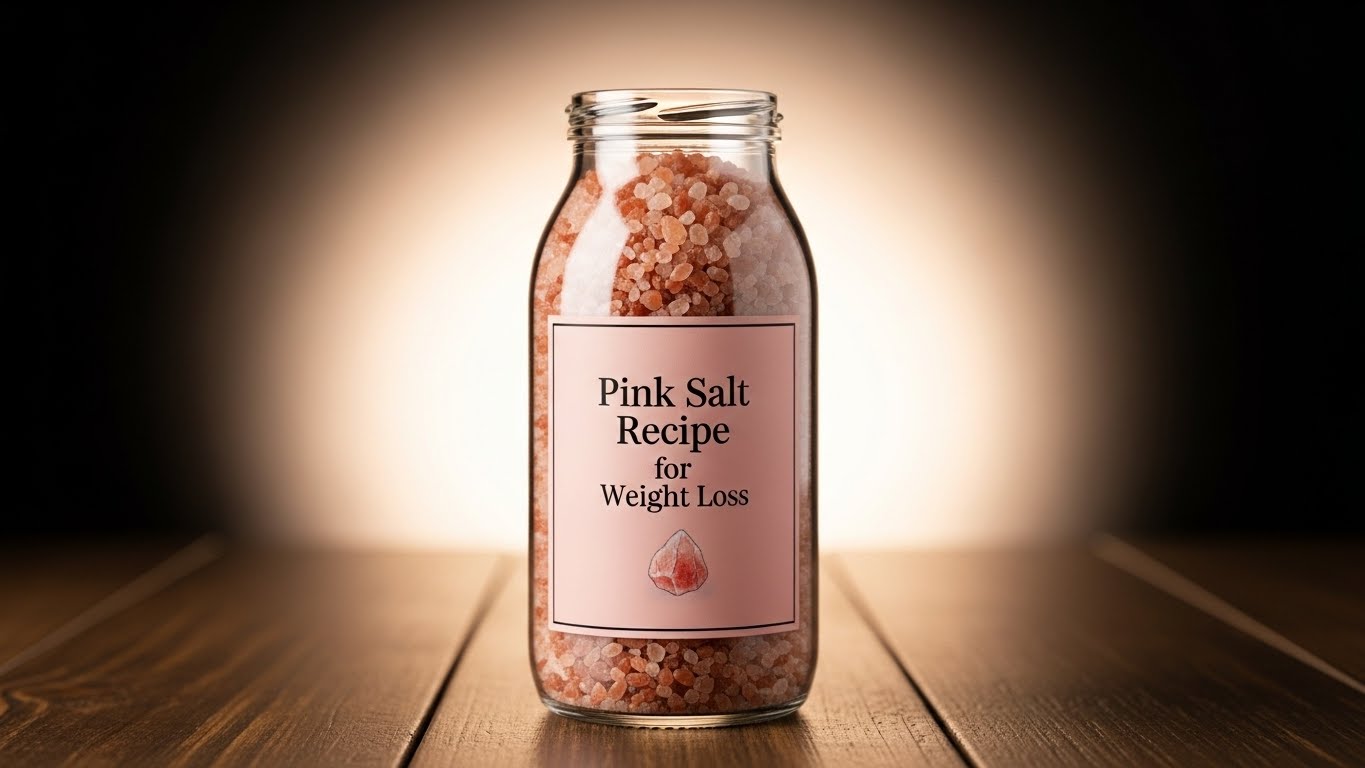
Pink Salt Recipe for Weight Loss: Does It Really Work

Medically Reviewed By Dr. Leslie scot ( HRT Specialist + LGBPT Support )
Like any other ongoing social media trend, losing weight while consuming pink salt is also a popular trend. According to influencers, this simple drink made from pink Himalayan salt and water can melt away pounds, boost metabolism, and transform your health overnight.
However, many medical professionals have pointed out, the gap between social media claims and scientific evidence is significant. So, let’s dig into it to find out what research says about salt and weight loss. Is it real or just another trend that will vanish after some time?
What Is Pink Himalayan Salt?
This pink salt comes from the largest Kehwra Salt Mine in Pakistan, near the Himalayan mountains. It is one of the oldest and second-largest salt mines in the world, discovered by the troops of Alexander the Great. It gets its pink color from iron oxide, which is basically rust.
Pink Himalayan salt is composed of approximately 98% sodium chloride, the same chemical compound that makes up regular table salt. The remaining 2% consists of trace minerals, including:
- Potassium
- Magnesium
- Calcium
- Iron
- Zinc
- Manganese
- Copper
Let’s Talk About How This Trend Started
Like many viral wellness trends, the pink salt trick gained popularity through social media. Influencers and wellness enthusiasts started sharing videos of themselves making and drinking this concoction. They claimed it was an ancient remedy or a secret hack that celebrities use.
The trend picked up steam in 2024 and continued into 2025. Some influencers even used AI-generated celebrity endorsements to make the trend seem more legitimate. However, these endorsements were fake.
How Pink Salt Differs From Table Salt
Learn about the differences between Pink Himalayan salt and table salt to clarify why claims about pink salt’s special properties are overstated.
Differences | Table Salt | Pink Salt |
Processing methods | Table salt undergoes extensive refinement to remove impurities and minerals. This results in nearly pure sodium chloride upto 97–98%. Anti-caking agents, such as calcium silicate, are often added to prevent clumping. | Pink Himalayan salt is less processed and retains its natural mineral content, though, as noted, these minerals exist in trace amounts. It contains no anti-caking agents. |
Iodine Content | One of the most important differences is that table salt in many countries, including the United States, is fortified with iodine. Iodine is a crucial nutrient for thyroid function and hormone production. Iodine deficiency can lead to thyroid problems, developmental issues in children, and other health complications. | The Pink Himalayan salt is not typically iodized, which means relying exclusively on pink salt could contribute to iodine deficiency if other dietary sources are inadequate. |
Sodium content | Contains 575mg of sodium, but it is considered processed and less healthy. | Contains 575mg of sodium, but is believed to be healthier because of its natural minerals. |
Taste and texture | White, fine texture; neutral taste | Pink color from mineral impurities; slightly different taste |
Cost | It is widely available and less expensive, seen as a basic household staple. | It is expensive due to several reasons, like sourcing, transportation, and marketing as a premium natural product. |
What is the Saltwater Trick Before Bed, and Does it Help to Lose Weight?
The famous “salt trick before bed” is a viral social media trend, such as drinking salt water for hydration or placing salt under a pillow for purification and better sleep. The drinking trick involves a pinch of salt (often Himalayan) in water, with optional additions like lemon juice or vinegar. People claim that drinking this mixture, especially first thing in the morning on an empty stomach, can help with weight loss.
According to many social media influencers, this drink can:
- Speed up your metabolism
- Reduce bloating and water retention
- Boost energy levels
- Support digestion
- Detoxify your body
- Help you burn fat faster
Then there is another viral “pillow trick” that people believe is to put salt in a cloth under your pillow to ward off bad dreams or negative energy.
However, experts state there is no scientific evidence to support weight loss claims for this drink and that its real benefits likely come from hydration and replacing sugary beverages, not the salt itself. Excessive salt intake can cause other health-related issues, like high blood pressure.
The Reality of Consuming Salt
Usually, if you consume a lot of salt, it can cause your kidneys to retain water. This leads to swelling of various body parts, especially feet and ankles. Your body retains extra fluid to balance the excess sodium. This condition, known as water retention or edema, causes puffiness and discomfort.
According to Dr Egan, consuming high amounts of salt increases protein in the urine. Similarly, some of the medications that we give for blood pressure reduce protein in the urine, too.
But that protein doesn’t work effectively if the salt consumption is not lowered or reduced at all. And many people are not aware that a patient with high blood pressure, diabetes, has a lot of protein and minerals in their urine.
Common Pink Salt Recipe Combinations
People mix pink Himalayan salt with numerous ingredients, each claiming different benefits.
Here are the most popular combinations found across social media platforms:
- Pink salt and water (Basic Recipe) is the simplest version involves dissolving 1/4 to 1/2 teaspoon of pink Himalayan salt in 8 to 12 ounces of water. Proponents claim this “rehydrates” the body and “kickstarts” metabolism.
- Pink salt, lemon, and water (the most common version) typically includes pink salt, fresh lemon juice from half a lemon, and warm or room-temperature water. Supporters claim the lemon adds vitamin C and helps with “detoxification.”
- The concoction of pink salt, lemon, and apple cider vinegar, supposedly, helps with blood sugar regulation and digestion, though these claims lack scientific backing.
- Drinking 1 to 2 teaspoons of a mixture of pink salt, lemon, and honey or maple syrup, though this adds sugar and calories to what is otherwise a zero-calorie drink.
- Pink salt, lemon, and cayenne pepper recipes include a dash of cayenne pepper, based on claims that capsaicin (the compound that makes peppers hot) can boost metabolism. While there is limited research suggesting capsaicin may have a very small effect on metabolism, the amounts used in these drinks are too small to make any meaningful difference.
- Drinking pink salt and warm water for 30 minutes before going to bed, advocates claim this improves sleep quality and regulates stress hormones, though no scientific studies support these assertions.
- Pink salt, cucumber, lemon, and mint in water is another way to consume salt, which is left to infuse overnight. It is marketed as a “spa water” for weight loss and detoxification.
- Steep fresh ginger in hot water, then add pink salt and sometimes lemon. The ginger is said to aid digestion and reduce inflammation, while the salt supposedly enhances mineral absorption.
- Pink salt with turmeric and black pepper, a golden-colored warm drink, has anti-inflammatory properties, but there is no evidence that this combination promotes weight loss.
- Some people add pink salt to their morning green tea, claiming it enhances the metabolism-boosting effects of the tea’s caffeine and antioxidants. However, adding salt to green tea does not amplify its benefits.
General Safety Guidelines for All Recipes
Now, even if you have decided to try any version of the pink salt trick despite medical advice against it, follow these safety guidelines:
- Start with minimal amounts
- Monitor your sodium intake thoroughly
- Consult your healthcare provider first, especially if you are a pregnant or breastfeeding mom
- Stay hydrated with plain water
- Watch for side effects
- Do not give to children, strictly
- Consider your total diet to maintain a healthy lifestyle
Why These Recipes Should Be Approached With Caution
It cannot be emphasized enough that none of these recipes has been clinically tested for safety or efficacy in weight loss.
Doctors suggest reducing or minimal salt intake just for the sake of tasty food, not for weight loss.
However, according to Dr. Childress, even a small amount of salt can be problematic. As per her, “Most likely, the only beneficiaries of this ‘trick’ would be helpful for athletes who sweat a lot, or people in outdoor or physically demanding professions who sweat a lot.” For the average person, additional sodium is unnecessary and potentially harmful.
If your goal is simply to drink more water, then plain water is the safest and most effective choice.
Adding lemon for flavor is generally harmless for most people (though those with acid reflux should be cautious).
However, the salt component provides no benefits and introduces unnecessary risks.
The Medical Community’s Response
As the pink salt trick gained traction, medical professionals and registered dietitians began speaking out to reduce the consumption of sodium in our diets. Their message has been consistent and clear: there is no scientific evidence supporting the use of pink salt for weight loss, and the trend may pose health risks for certain individuals.
Along with Dr Natalie Allen, a registered dietitian, and Dr Allison Childress, an associate professor of nutritional sciences, warns that the trend can be particularly dangerous for people with high blood pressure, kidney disease, or heart conditions.
According to Dr Hans Schmidt, co-director for the Center for Weight Loss and Metabolic Health at Hackensack University Medical Center, explains that complex factors, including age, genetics, muscle mass, and physical activity levels, influence metabolism. A small amount of salt dissolved in water cannot meaningfully impact these processes.
The dietitians and health care experts suggest keeping yourself hydrated. Adding salt to warm water offers no weight loss advantages; instead may introduce unnecessary health risks.
Where to Buy Pink Salt From?
Pink salt is chemically similar to table salt, and it is readily available in any grocery store like Walmart, Target, etc., check in their spice aisle.
Why the Claims Are Misleading
Let’s break down the common claims and what science actually tells us:
Claim 1: Pink salt speeds up metabolism
While in reality there is no research available that second this metabolism speed up due to salt. Factors like your age, muscle mass, genetics, and activity level determine your metabolism. Drinking salt water will not change these factors.
Claim 2: Pink salt reduces bloating and water retention
This claim is actually the opposite, because consuming extra sodium can cause water retention, not reduce it. When you eat or drink more salt than your body needs, your body holds onto extra water to dilute the sodium. This can make you feel bloated and puffy.
Claim 3: Pink salt detoxifies your body
No. Your liver and kidneys are already doing an excellent job of detoxifying your body. You do not need special drinks to help with this process. The idea that you need to “detox” your body with special ingredients is not supported by science.
Claim 4: Pink salt helps burn fat
There is no evidence that salt has any effect on fat burning. To lose body fat, you need to be in a calorie deficit, which means burning more calories than you consume.
Could Pink Salt Water Actually Cause Weight Gain?
Ironically, the pink salt trick might lead to temporary weight gain due to water retention in your body instead of weight loss because extra sodium causes water retention. Well, again, it is not about fat gain, but it can make you feel bloated and puffy.
Why Do Some People Report Weight Loss?
If the pink salt trick does not work, why do some people claim it helped them lose weight?
However, below are several evidence-based explanations:
- Placebo effect: When people believe something will help them lose weight, they may perceive changes that are not actually occurring. They might also unconsciously modify other behaviors in ways that support weight loss.
- Concurrent lifestyle changes: People who start drinking pink salt water often simultaneously begin other healthy habits like eating better, exercising more, or tracking their food intake. These other changes are the real reason for weight loss, but they attribute their success to the salt water.
- Replacing caloric beverages: If someone replaces their morning soda, juice, or sweetened coffee with salt water, they reduce their calorie intake. This calorie reduction, not the salt water itself, leads to weight loss.
- Increased overall hydration: If someone was chronically dehydrated before starting this trend, drinking more fluids might help them feel better and have more energy. This increased energy might lead to more physical activity, which could support weight loss.
- Temporary water weight fluctuations: Weight naturally fluctuates several pounds throughout the day and week due to changes in water retention, digestive contents, and other factors. Someone might weigh themselves at a temporary low point and attribute it to the salt water.
- Confirmation bias: People who want the pink salt trick to work may focus on any positive changes while ignoring negative changes or times when nothing happened.
Why is it Important to follow an Adequate Diet instead of Shortcuts?
Quick fixes don’t last long; that’s why it is important to follow the proper diet plan. The results are slow but not temporary.
Balanced Diet
Rather than looking for quick fixes, focus on a balanced diet, such as:
- Aim to fill half your plate with vegetables at each meal. They are low in calories but high in nutrients and fiber, which helps you feel full.
- Include a variety of fruits for vitamins, minerals, and fiber. While fruit contains natural sugars, it also provides important nutrients.
- Choose whole grains like brown rice, quinoa, oats, and whole wheat bread instead of refined grains.
- Include sources like chicken, fish, eggs, beans, lentils, and tofu. Dr. Childress notes that protein increases satiety, meaning it helps you feel fuller for longer.
- Include moderate amounts of healthy fats from sources like avocados, nuts, seeds, and olive oil.
Exercise Regularly
Physical activity is important not just for weight loss, but for overall health and well-being.
Many health experts suggest aiming for at least 150 minutes of moderate-intensity or 75 minutes of vigorous-intensity aerobic activity per week.
This could include:
- Brisk walking
- Jogging or running
- Cycling
- Swimming
- Dancing
- Playing sports
According to gym trainers, practicing strength training two to three times per week to preserve lean body mass while you lose weight.
Strength training helps you:
- Build and maintain muscle
- Increase your metabolism
- Improve bone density
- Enhance functional fitness
You do not need a gym membership to strength train. Bodyweight exercises, resistance bands, or free weights at home can all be effective.
Beyond structured exercise, try to increase your overall daily activity by:
- Taking the stairs instead of the elevator
- Parking farther away from store entrances
- Going for walks during breaks
- Standing or walking while on phone calls
- Doing household chores vigorously
Stay Hydrated (With Plain Water)
Proper hydration is important for weight loss and overall health, but you do not need to add salt to your water. Just drink plain water.
The most interesting fact about dehydration is that it gives hunger signals to the brain. So all of a sudden, you start feeling hungry or craving sugary stuff. Overeating and consuming a lot of sugar lead to weight gain.
Drinking water before every meal can help some people feel fuller and eat less food at mealtime. You can also drink plain sparkling water without added sugars if you prefer carbonation.
A general guideline is to aim for about 8 glasses (64 ounces) per day, but your needs may vary based on your activity level, climate, and individual factors. A good indicator of proper hydration is pale yellow urine.
Get Adequate Sleep
Sleep plays a crucial role in weight management. Poor sleep can:
- Increase hunger hormones
- Decrease satiety hormones
- Lead to cravings for high-calorie foods
- Reduce motivation to exercise
- Affect your metabolism
Aim for 7 to 9 hours of quality sleep per night.
Manage Stress
Chronic stress can make weight loss more difficult by:
- Increasing cortisol, which can promote fat storage
- Leading to emotional eating
- Disrupting sleep
- Reducing motivation for healthy behaviors
Find healthy ways to manage stress, such as:
- Meditation or mindfulness practices
- Deep breathing exercises
- Yoga
- Spending time in nature
- Connecting with friends and family
- Engaging in hobbies you enjoy
Follow Trends Wisely!
Not every trend is worth following that is viral on social media. Especially when it comes to your weight loss or any health-related related, always research and look for evidence. Seek medical advice before consuming any food, drink, or therapy that has the potential to affect your health.
Remember, the best approach to weight loss is one that is safe, sustainable, and based on solid scientific research. Skip the salt water and focus on building healthy habits that you can maintain for life.